
Self-Improvement
Embracing the Man in the Arena Mindset for Real Growth
The ‘man in the arena’ quote inspires courageous action and resilience. It’s about stepping forward, facing judgment, and committing to a life of impact.


The ‘man in the arena’ originates from Theodore Roosevelt’s 1910 speech ‘Citizenship in a Republic,’ delivered at the Sorbonne in Paris. It asserts that honor belongs strictly to the individual who actively strives, bleeds, and risks failure in pursuit of a cause, rather than the cynical observer who judges from safety.
Roosevelt presented this iconic passage on April 23, 1910, shortly after completing his second term as President of the United States and finishing an extensive expedition through Africa. Speaking to an audience of French professors, students, and statesmen, Roosevelt targeted the growing detachment of intellectual elites who preferred cynical commentary over public responsibility. The passage remains one of the most cited speeches in modern history because it articulates a universal reality: meaningful achievement requires exposure to failure.
What is the full Theodore Roosevelt “man in the arena” quote?
Understanding Roosevelt’s concept requires reading the entire passage, as each sentence defines a distinct boundary between action and observation:
“It is not the critic who counts; not the man who points out how the strong man stumbles, or where the doer of deeds could have done them better. The credit belongs to the man who is actually in the arena, whose face is marred by dust and sweat and blood; who strives valiantly; who errs, who comes short again and again, because there is no effort without error and shortcoming; but who does actually strive to do the deeds; who knows great enthusiasms, the great devotions; who spends himself in a worthy cause; who at the best knows in the end the triumph of high achievement, and who at the worst, if he fails, at least fails while daring greatly, so that his place shall never be with those cold and timid souls who neither know victory nor defeat.”
Roosevelt contrasts two distinct groups of people. On one side stands the practitioner—the person whose face shows physical and emotional wear from active participation. On the other side stands the critic, referred to as a “cold and timid soul.” Roosevelt does not claim that the practitioner will always win; rather, he argues that winning or losing is secondary to the act of stepping into the ring.
What are the main components of Roosevelt’s speech?
Deconstructing the passage reveals five core principles that define what it means to live in the arena:
- The Irrelevance of Spectators: The critic operates without skin in the game. Because they risk nothing, their assessments carry no true authority over those taking real risks.
- The Necessity of Imperfection: Roosevelt states that “there is no effort without error and shortcoming.” Mistakes are not evidence of incompetence; they are proof of active engagement.
- The Value of Effort Over Result: Credit is granted for striving valiantly and spending oneself in a worthy cause, regardless of whether the ultimate outcome is victory or defeat.
- Daring Greatly: Taking calculated risks in pursuit of ambitious goals requires accepting that public defeat is a possible outcome.
- The Avoidance of Passivity: The worst state of existence in Roosevelt’s view is remaining in safe neutrality, never testing your limits or taking a firm stand.
Why does the arena concept matter today?
Modern workplaces and communication channels have expanded the reach of spectators. Online reviews, anonymous comment sections, and continuous workplace oversight allow anyone to critique work without ever attempting to build something themselves. This creates an environment where staying safe appears preferable to taking creative or professional risks.
However, personal expansion follows a predictable mechanical law: comfort expands to absorb ambition when you refrain from pushing outward. Consider how spending habits behave after a income increase: raises rarely make people feel wealthier because spending expands to absorb income within 60–90 days before savings adjust. In the exact same way, your psychological comfort zone shrinks around your current routine unless you force yourself into high-stakes environments.

Every field has its own arena. In business, it is pitching a new business model to a skeptical board. In creative disciplines, it is releasing unrefined original work to the public. In relationships, it is initiating difficult conversations to address systemic conflict. Staying on the sidelines keeps you safe from public errors, but it guarantees personal stagnation.
What does Brené Brown teach about the arena mindset?
Research professor Brené Brown brought Roosevelt’s text back into mainstream modern discourse in her book Daring Greatly. Brown links Roosevelt’s message directly to emotional vulnerability and shame resilience, arguing that you cannot experience genuine connection, innovation, or leadership without exposing yourself to vulnerability.
Brown established a key evaluation rule based on the speech: if someone is not also in the arena taking hits and risking failure, their opinion about your work should not carry weight. You can read more about Brené Brown’s insights to see how vulnerability functions as a performance driver rather than a weakness.
Applying Brown’s rule requires dividing feedback into three clear categories:
- Constructive Criticism from Peers: Feedback from people who are currently in the arena fighting similar battles. This feedback is essential for improvement.
- Spectator Noise: Objections from onlookers who judge your efforts from safety. This feedback should be dismissed immediately.
- Self-Censorship: Internal anxiety generated by fear of what spectators might say. Recognizing spectator noise helps quiet this internal interference.
How to step into your arena in 5 steps
Transitioning from an observer to an active participant requires a clear, deliberate framework. Follow these five practical steps to enter and remain in your chosen field of action:
- Identify Your Arena: Pinpoint the specific area where fear of judgment is keeping you passive. Is it asking for a promotion, starting a company, publishing research, or confronting a personal challenge? Define the exact boundaries of where you need to take action.
- Define Your Rationale: Before exposing yourself to public feedback, write down why this pursuit matters to you. A clear internal mandate serves as armor when facing initial setbacks or criticism.
- Apply the Arena Feedback Filter: Before taking feedback to heart, ask one question: “Is this person actively risking failure in a similar endeavor?” If the answer is no, disregard the comment.
- Reframe Failure as Standard Data: Accept that errors, awkwardness, and setbacks are the admission price for growth. When a launch fails or a proposal is rejected, treat it as operational data rather than a personal character flaw.
- Commit to Daily Execution: Courage is built through repeated small actions rather than single dramatic moments. Speak up in daily meetings, submit work before it feels flawless, and publish ideas consistently (see Unlock Deeper Value: Staycation Ideas That Outperform Costly Trips for building consistent daily routines).

What are the trade-offs of living in the arena?
Adopting this philosophy is not a simple self-improvement trick; it involves real trade-offs and physical or emotional costs that must be calculated in advance.
Benefits
- Accelerated Skill Acquisition: Real-world execution yields faster, cleaner feedback loops than theoretical study.
- Resilience Building: Experiencing failure and surviving it removes the paralyzing mystery around defeat.
- Autonomy and Self-Respect: Operating according to internal goals builds lasting confidence that external praise cannot duplicate.
- Tangible Progress: Direct action produces real artifacts, revenues, products, and relationships, whereas passive observation produces only commentary.
Trade-offs and Risks
- Emotional Fatigue: Continual exposure to risk and effort demands substantial energy and regular recovery periods.
- Public Misunderstanding: Observers will frequently misinterpret your motives, timing, or methods without taking time to understand your objectives.
- Financial and Career Exposure: Taking bold steps can result in short-term setbacks, loss of capital, or missed conventional milestones.
- Potential for Burnout: Treating every minor task as a life-or-death battle leads to chronic exhaustion and reduced decision quality.
Who is the arena mindset NOT for?
While Roosevelt’s philosophy encourages boldness, it is not universally applicable to every situation or person:
- People in Acute Emotional Trauma or Crisis: Those recovering from severe emotional distress need stability, psychological safety, and quiet recovery, not high-stakes public risk.
- Situations Requiring Reckless Risk Management: Operating in the arena does not justify reckless gambling with corporate capital, physical safety, or fiduciary duties. True striving involves calculated risk, not blind impulse.
- Strictly Regulated Operational Compliance: In environments requiring standardized adherence to safety protocols (such as aviation maintenance or surgical procedures), unapproved experimentation from individual bravado is dangerous and inappropriate.
How to handle criticism, failure, and fatigue
Remaining in the arena over a long career requires strategies to manage negative feedback, operational failures, and mental fatigue.
First, separate constructive critiques from unhelpful commentary. Constructive feedback is specific, actionable, and focuses on the work itself. Unhelpful commentary is emotional, generalized, and targets your character. When you receive feedback, ask yourself: “Can I use this specific point to improve my next attempt?” If the answer is no, set the comment aside.
Second, build recovery periods directly into your operational calendar. High performers in sports and business understand that continuous stress without strategic rest leads to rapid performance decline. Professional athletes, executive leaders, and artists schedule downtime to review performance metrics, rest physical bodies, and process operational lessons before returning to competition.
A notable sports example is documented in the series ‘Man in the Arena: Tom Brady’ (2021-2022), which explores how seven-time Super Bowl champion Tom Brady navigated intense public scrutiny, physical injuries, and continuous career pressure across twenty-two seasons in professional football. You can read more about his career arc in the entry for man in the arena.

How does perfectionism act as a sideline trap?
Perfectionism is often framed as a high standard of quality, but in practice, it functions as a sophisticated defense mechanism designed to keep you out of the arena. By delaying product launches, withholding written articles, or avoiding tough conversations until conditions are “perfect,” you protect yourself from judgment.
The arena philosophy forces a direct confrontation with perfectionism. Striving valiantly requires releasing work that is good enough to test, gathering real user data, and refining the product through iterative feedback loops. Action creates clarity; waiting on the sidelines creates only anxiety.
Frequently asked questions
What is the main message of the “man in the arena” speech?
The core message is that honor and credit belong to those who actively step forward to strive, take risks, and endure failure, rather than the spectators who sit on the sidelines and criticize the efforts of others.
Who originally gave the “man in the arena” quote?
The quote was delivered by former U.S. President Theodore Roosevelt on April 23, 1910, at the Sorbonne in Paris as part of a larger speech titled “Citizenship in a Republic.”
How do you differentiate constructive feedback from useless noise?
Evaluate the source and substance: constructive feedback comes from people who are also actively involved in similar work, and it offers specific, actionable ways to improve. Useless noise comes from passive spectators, offers non-specific hostility, and targets the individual rather than the output.
Does being in the arena mean ignoring all negative feedback?
No. Being in the arena means selectively filtering feedback so that you absorb valid operational lessons from experienced practitioners while ignoring cynical critiques from uninvolved spectators.
What is the difference between courage and recklessness in the arena?
Courage involves taking calculated risks in pursuit of a meaningful objective while accepting responsibility for potential failure. Recklessness involves taking uncalculated, irresponsible gambles that jeopardize resources, safety, or teams without a grounded strategy.






Self-Improvement
Close Your Mind? Why It Actually Holds You Back
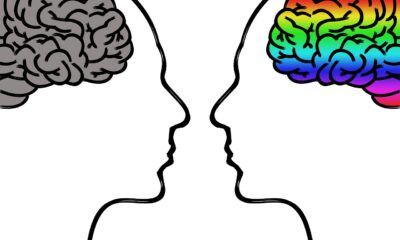
A closed mind can subtly halt personal growth, stifle creativity, and strain relationships. Discover the hidden ways intellectual inflexibility manifests and practical strategies to cultivate a more open, adaptable perspective for a richer, more fulfilling life.

A mind close refers to cognitive rigidity where an individual actively shuts down incoming information, alternative viewpoints, or evidence that contradicts their existing beliefs. This psychological defense mechanism protects established identity and emotional comfort, but it ultimately blocks critical reasoning, personal development, and effective decision-making.
When you close your mind to new information, your brain relies heavily on existing cognitive shortcuts. While these shortcuts save energy, they leave you vulnerable to outdated assumptions, unexamined biases, and poor real-world outcomes. Understanding why this cognitive resistance happens and learning how to expand your perspective is essential for working through professional changes and building healthy relationships.
- What is a Closed Mind (and Why it Matters for Growth)?
- The Subtle Signs You Might Be Closed-Minded
- The Hidden Costs: How a Closed Mind Limits Your Life
- Why We Cling to a Fixed Mindset: The Psychology Behind Resistance
- Cultivating Openness: Practical Steps to Expand Your Perspective
- Navigating Conversations with Closed-Minded Individuals
- Avoiding Common Traps: The Nuances of Intellectual Flexibility
- Embracing a Growth Mindset: A Path to Continuous Improvement
- Frequently Asked Questions
What is a closed mind and how does it manifest?
At its core, a closed mind represents a state of intellectual inflexibility where you reject alternative views, counter-evidence, or unfamiliar concepts before evaluating them on their merits. People who operate with a closed mind cling tightly to existing assumptions. They view challenges to their ideas as personal attacks rather than opportunities to refine their understanding.
This state differs fundamentally from holding strong, evidence-backed convictions. Having strong convictions means arriving at a conclusion after thorough examination while remaining willing to adjust your position if better facts emerge. A closed mind operates in reverse: it starts with a fixed conclusion and discards any information that disproves it. It creates a mental echo chamber where only familiar, comforting thoughts are processed.
The behavioral differences between open and closed approaches show up across common daily scenarios:
| Scenario | Closed Mind Response | Open Mind Response |
|---|---|---|
| Receiving critical feedback | Defends personal position immediately, dismisses the reviewer’s insight, and views critique as an attack. | Listens without interrupting, separates self-worth from performance, and evaluates actionable points. |
| Encountering conflicting data | Rejects data source, looks for trivial flaws to invalidate findings, or ignores facts entirely. | Examines methodology, compares new data against current models, and adjusts belief if data holds up. |
| Resolving team disagreements | Pushes singular viewpoint until others concede; treats compromise as a personal loss. | Asks clarifying questions, seeks underlying motives, and looks for synthesis across viewpoints. |
| Handling personal mistakes | Blames external factors, shifts responsibility, and repeats identical patterns in future attempts. | Acknowledges error, analyzes root causes, and updates operational approach to avoid repeating it. |
Why do people close their mind to new ideas?
No one sets out with the deliberate goal to shut down their critical thinking. Cognitive rigidity develops from psychological protective mechanisms designed to keep emotional distress manageable.

Cognitive dissonance and identity threat
When new facts conflict with deeply held beliefs, your brain experiences cognitive dissonance—a state of mental discomfort identified by psychologist Leon Festinger. To resolve this tension quickly, the mind can either alter its underlying belief or reject the conflicting fact. Because altering established beliefs requires significant mental effort, the brain frequently defaults to rejecting the incoming fact.
When your beliefs become fused with your personal identity, accepting counter-evidence feels like destroying part of who you are. Disproving a political, professional, or personal concept triggers an defensive reflex similar to physical danger.
The need for cognitive closure and certainty
Uncertainty demands continuous mental effort. The brain naturally seeks order and predictability to conserve energy. Holding rigid views offers an immediate sense of certainty, protecting you from the ambiguity of complex problems. Accepting that a topic is nuanced forces you to sit with discomfort, whereas a absolute stance provides quick, effortless answers.
Past risk conditioning
If changing your mind or stepping outside your comfort zone resulted in embarrassment, failure, or social rejection in the past, your brain builds protective defenses. It associates ideological flexibility with risk, prompting an automatic rejection of unfamiliar options to keep you safe.
What are the main warning signs of a closed mind?
Identifying cognitive rigidity in yourself requires deliberate self-observation, as the signs are often masked as confidence or loyalty to principles.
- Immediate dismissiveness: You form a negative judgment within seconds of hearing an opposing argument, before the speaker finishes explaining their reasoning.
- Absolute vocabulary: Your statements frequently rely on words like “always,” “never,” “impossible,” or “that is just how things are.”
- Echo chamber curation: You exclusively read, watch, and speak with people who agree with your existing worldview, feeling intense irritation when exposed to differing channels.
- Discomfort with ambiguity: You struggle when problems lack simple, black-and-white solutions, demanding immediate categorical answers even for complex systems.
- Personalizing debate: You view intellectual disagreements as personal slights, suspecting bad intentions in anyone who questions your assumptions.
- Lack of curiosity: You rarely ask genuine questions aimed at understanding how another person reached their conclusion, focusing instead on formulating rebuttals.
What are the hidden costs of keeping your mind closed?
Operating with a rigid mindset brings quiet, cumulative damage across career trajectory, personal finances, and mental health.
In professional environments, inflexibility accelerates skill obsolescence. As industry standards, software tools, and management models evolve, refusal to adapt leaves expertise outdated. A 2026 report by LinkedIn Learning highlights adaptability and curiosity as primary soft skills evaluated by employers, directly opposing rigid mental patterns.
Financial decision-making suffers when you cling to single perspectives or ignore changing market realities. Failing to re-examine monthly expenditure habits, ignoring new tools, or dismissing updated economic data introduces hidden costs that erode savings over time (see Cash Back Apps: Smart Savings, Real Rewards, and Hidden Costs for advice on auditing personal budgets).
In personal relationships, ideological rigidity creates emotional distance. When family members or colleagues feel unheard, communication shifts from authentic dialogue to defensive routine, leading to recurring conflicts and unresolved resentment.
How to open a closed mind step by step
Building intellectual flexibility is a deliberate practice that re-trains your brain’s automatic reactions to novel or challenging information.

- Implement a response delay during conversations: When you hear an opinion that triggers disagreement, enforce a mandatory five-second pause before speaking. Use this pause to suppress defensive instincts and formulate a question rather than a counter-argument.
- Audit core assumptions monthly: Select one belief you take for granted in your industry or lifestyle. Spend twenty minutes writing down three valid arguments against that belief, examining evidence without declaring a winner.
- Practice ‘what if’ reframing: Mentally accept a contested premise as true for ten minutes. Ask yourself: “If this premise were fully accurate, what choices would I make differently?” This exercise stretches logic muscles without destroying underlying values.
- Diversify information intake: Read analyses from publications, authors, or researchers outside your regular ideological circle. Focus on well-reasoned pieces rather than inflammatory outrage content to understand foundational logic.
- Normalize saying “I don’t know”: Actively replace guessing or immediate defensive answers with explicit admissions of incomplete knowledge. Admitting uncertainty opens the door to genuine learning.
- Identify cognitive biases in action: Watch for confirmation bias (seeking only facts that prove you right) and anchoring bias (relying excessively on the first piece of information received). Labeling these biases in real time weakens their influence over your decisions.
How do you communicate with a closed-minded person?
Interacting with someone stuck in a rigid mindset requires patience, tactical communication, and clear personal boundaries.
Directly confronting a closed-minded individual usually triggers ego defenses, causing them to double down on their original stance. Instead, apply Socratic questioning. Ask clarifying questions like, “What specific evidence would alter your perspective on this?” or “How did you arrive at that conclusion?” These questions prompt self-reflection without backing the person into a corner.
Empathy plays an essential role in lowering ideological walls. According to a study published by the American Psychological Association (2023), empathy bridges deep communication divides even when core disagreements remain unresolved. Acknowledge their underlying concerns before introducing new information.
When presenting an alternative viewpoint, state it as a personal observation rather than an absolute correction. Frame your points using “I” statements, such as “I see it differently because…” rather than “You are wrong about…”
Know when to walk away. If a conversation becomes circular, aggressive, or emotionally exhausting, disengage politely. Protecting your mental energy is more valuable than winning a unproductive argument.
What are the risks of extreme open-mindedness?
Working to recover from a mind close can sometimes cause individuals to swing too far in the opposite direction, creating new intellectual traps.

True open-mindedness does not mean accepting every claim without scrutiny. One common trap is intellectual faddism—adopting every novel concept or trend immediately without evaluating its underlying evidence or logical consistency. An open mind evaluates incoming information; it does not absorb everything uncritically.
Another risk is false equivalence, where unsupported claims are given equal weight alongside thoroughly tested, empirical facts. Open-mindedness requires rigorous evaluation standards. Maintain a stable foundation of core values—ethics, critical thinking, fundamental logic—while remaining agile in how you apply those values to fresh challenges.
How does a growth mindset combat a mind close?
Psychologist Carol Dweck developed the distinction between a fixed mindset and a growth mindset. A fixed mindset assumes intelligence and capabilities are static traits, leading people to avoid challenges that might reveal limitations. This fixed perspective is the foundational engine of a closed mind.
A growth mindset views intelligence and skill as malleable qualities developed through effort, feedback, and experimentation. When you adopt a growth mindset, mistakes stop feeling like identity threats and start looking like valuable analytical data. This shift removes the fear of being wrong, dismantling the primary reason people shut down their minds (see How to Start a Savings Plan: Your Blueprint for Financial Momentum for strategies on building personal resilience).
Frequently asked questions
What is the difference between a closed mind and strong convictions?
A closed mind rejects counter-evidence automatically to preserve existing beliefs. Strong convictions are deeply held principles that remain open to re-examination if presented with rigorous, well-reasoned facts.
Can someone with a closed mind actually change?
Yes. Developing intellectual flexibility is a learnable skill that requires ongoing self-awareness, active bias checking, intentional exposure to varied viewpoints, and a practice of empathy.
How does a closed mind impact daily decision-making?
It restricts decision-making by forcing complex problems into simplified mental models, encouraging confirmation bias, ignoring operational risks, and driving suboptimal outcomes across personal and professional domains.
Is being open-minded always beneficial?
Open-mindedness is beneficial when paired with critical thinking. Without analytical evaluation, extreme openness can lead to gullibility, intellectual faddism, or a lack of stable foundational principles.
What role does fear play in having a closed mind?
Fear is the primary driver of cognitive rigidity. Fear of uncertainty, fear of identity loss, and fear of admitting mistakes drive individuals to cling tightly to familiar ideas as a protective measure.
Self-Improvement
Richard Feynman’s Letter to His Wife: A Masterclass
Richard Feynman’s letter to his wife, Arline, offers a rare glimpse into the heart of a scientific genius grappling with profound loss. This unmailed testament to enduring love provides invaluable lessons for anyone navigating grief and maintaining deep connection, even after death.

Richard Feynman’s letter to his wife, Arline Greenbaum Feynman, is an unmailed love letter written on October 17, 1946, sixteen months after her death from tuberculosis. Discovered and opened after Feynman’s death in 1988, the letter captures a brilliant physicist expressing intense grief, enduring devotion, and his honest struggle to cope without her.
Feynman wrote the letter while working as a professor at Cornell University, well over a year after Arline passed away at age 25. Rather than suppressing his emotions or pretending he had moved on, Feynman sat down and penned a raw, unedited conversation with his late wife. He then sealed it in an envelope, added a heartbreaking postscript on the outside, and kept it hidden in a desk drawer for the rest of his life. Today, the document stands as one of the most honest accounts of grief ever written by a public figure.
How Richard and Arline Feynman met and faced tragedy
To understand the emotional weight behind the richard feynman letter to his wife, you have to understand their relationship during the early years of World War II. Richard Feynman met Arline Greenbaum when they were teenagers growing up in Far Rockaway, Queens. They were high school sweethearts who shared an unconventional humor, a fierce independence, and an intense emotional bond.
While Feynman was pursuing his doctorate in physics at Princeton University, Arline became chronically ill. Doctors eventually diagnosed her with tuberculosis of the lymphatic glands—a terminal condition at the time. Despite strong objections from Feynman’s parents, who worried about infection risks and financial strain, Feynman insisted on marrying her. In June 1942, Feynman picked up Arline in a borrowed station wagon, stopped at Richmond County City Hall on Staten Island for a brief civil ceremony without family present, and drove her straight to a sanatorium.
Shortly after their marriage, Feynman joined the Manhattan Project at Los Alamos, New Mexico. Determined not to be separated, Feynman arranged for Arline to stay at the Albuquerque Sanatorium, roughly 100 miles from the secret laboratory. Every weekend, Feynman hitched rides, borrowed cars, or took buses across the desert to spend time at her bedside. On June 16, 1945—just weeks before the Trinity nuclear test—Arline died at the age of 25. Feynman was 27.
What Feynman wrote in the unmailed letter of October 17, 1946
Sixteen months after Arline’s death, Feynman sat down to write to her. The letter is not a polished literary essay; it is an intimate, uncensored expression of love and longing. He begins by explaining why he is writing to her despite knowing she cannot read it:
“D’Arline, I adore you, sweetheart. I know how much you like to hear that — but I don’t only write it because you like it — I write it because it makes me warm all over inside to write it to you.”
Feynman directly addresses the paradox of writing to someone who no longer exists. As a physicist who held a strict, empirical view of the natural world, Feynman did not believe in an afterlife. He knew Arline could not hear him or read his words. Yet his emotional reality demanded an outlet that logic could not provide.
He wrote about his difficulty adjusting to a life without her:
“It is terribly hard for me to understand what it means to love you after you are dead — but I still want to comfort and take care of you — and I want you to love me and care for me. I want to have problems to discuss with you — I want to do little projects with you.”
The most striking passage in the entire document cuts directly through any attempt at stoicism:
“I love my wife. My wife is dead. You, dead, are so much better than anyone else alive.”

Why the letter remained sealed in a desk drawer for 42 years
When Feynman finished writing the letter, he folded the sheets of paper and placed them inside an envelope. On the outside of the envelope, he typed or wrote a famous line that captures both his characteristic humor and his deep heartbreak:
“P.S. Please excuse my not mailing this letter — but I don’t know your new address.”
He sealed the envelope and put it away. Feynman did not share the letter with his friends, colleagues, or subsequent wives. He remarried twice—first to Mary Louise Bell in 1952 (a brief marriage that ended in divorce) and later to Gweneth Howarth in 1960, with whom he had two children and remained until his death in 1988.
Throughout those decades, the sealed envelope remained undisturbed in his personal files. It was only after Feynman died of cancer on February 15, 1988, that his biographers and family opened the envelope while organizing his personal archives. The letter was later published in his autobiographical collection What Do You Care What Other People Think? and featured in analyses by writers at FS.blog.
How Feynman balanced scientific logic with intense grief
Feynman was celebrated globally for his ability to dismantle complex theoretical physics into clear, logical principles. He had no patience for self-deception or empty sentimentality. Yet the richard feynman love letter demonstrates that even the most hyper-rational mind cannot solve grief through logic alone.
In the letter, Feynman openly admits the contradiction of his actions. He writes to Arline about how she would react if she were alive:
“I know you will tell me that I am foolish and that you want me to have full happiness and that you don’t want to be in my way. I’ll bet you’re surprised that I haven’t even got a girlfriend… after two years (you knew I couldn’t fool you, couldn’t you?).”
He notes that he had met other women and tried to date, but found every experience unsatisfactory because nobody could compare to Arline. Rather than forcing himself to feel better or pretending he had moved past the loss, he accepted his state of mind for what it was—a mess of lingering love and unresolved pain.

What modern grief psychology teaches us about Feynman’s letter
For decades, popular culture operated under the mistaken belief that grief follows predictable stages leading to complete “closure” or moving on. Modern bereavement research offers a very different view, often referred to as the continuing bonds framework. This model suggests that healthy grieving does not require severing ties with a deceased loved one, but rather finding new ways to maintain an ongoing internal connection with them.
Feynman’s letter is a classic example of continuing bonds in practice. By writing to Arline, Feynman created a private space where he could continue his internal dialogue with her. The act served several specific psychological functions:
- Unfiltered emotional release: Because Feynman knew no living person would read the letter during his lifetime, he felt no pressure to appear calm, stoic, or recovered.
- Validation of persistent love: Writing allowed him to acknowledge that loving a deceased person is not irrational, but a natural expression of attachment.
- Integration of loss: Articulating his pain on paper helped him organize his complex feelings rather than burying them beneath his demanding academic work.
Psychological research into expressive writing shows that putting emotional trauma into physical words reduces physiological stress and helps individuals process grief at their own pace. Feynman arrived at this tool naturally, without therapeutic guidance.
How to write an unmailed letter to process personal loss
If you are struggling with the loss of a loved one, writing an unmailed letter—much like Feynman did—can be a practical tool for processing grief. You do not need to be a scientist or professional writer to benefit from the practice. Here is a clear approach to using expressive writing for loss:
- Choose a private, distraction-free environment: Write in a room where you feel completely safe and will not be interrupted. You must feel confident that no one will read your words unless you choose to show them.
- Address the person directly: Use their name or the personal terms of endearment you used when they were alive. Speaking to them directly unlocks genuine emotional responses.
- Write without editing or self-censorship: Do not worry about grammar, structure, or whether your thoughts sound reasonable. Allow contradictions, anger, sadness, or fond memories to flow freely.
- Acknowledge the current reality: Like Feynman, it is helpful to express the exact nature of your current struggle—whether that means admitting you miss their advice, feeling lonely, or acknowledging how hard it is to move forward.
- Decide what to do with the physical letter: Once finished, you can seal it in an envelope and store it in a drawer, keep it in a private box, or destroy it as a symbolic release. The primary benefit lies in the act of writing itself.

The historical legacy and auction of Feynman’s letters
Decades after its discovery, Feynman’s letter to Arline remains one of the most widely cited love letters in modern biography. Historical archives and auction houses have highlighted the extraordinary personal value of Feynman’s early correspondence. As detailed by Sotheby’s, letters and personal documents from Feynman’s youth provide rare insight into the emotional reality of a man who helped shape modern theoretical physics while enduring deep heartbreak.
The widespread interest in the letter shows why it continues to resonate with readers. People often view public figures—especially scientists—as detached thinkers focused entirely on abstract concepts. Seeing Feynman express raw, unabashed love humanizes him and offers comfort to anyone who feels isolated by their own grief.
Common mistakes when managing grief (and how Feynman avoided them)
When facing major loss, social pressure and internal expectations often lead to common mistakes that complicate the grieving process. Examining Feynman’s letter reveals several counter-intuitive truths about navigating grief:
Forcing yourself to adhere to a strict recovery timeline
Many people expect grief to subside within a few months. When feelings of intense loss persist over a year later, they worry that they are failing to recover. Feynman showed that grief does not follow a strict schedule. Sixteen months after Arline’s death, his feelings remained intense, and he allowed himself to acknowledge them fully.
Suppressing love out of fear of living in the past
A common mistake is assuming that continuing to love someone who has died prevents you from living in the present. Feynman’s letter demonstrates that love does not vanish simply because a person is gone. Acknowledging that affection remains real is far healthier than trying to erase it.
Guilt over comparing new relationships to what was lost
When attempting to re-enter social life, people often feel frustrated or guilty when new relationships fail to match the bond they shared with a deceased partner. Feynman explicitly noted in his letter that other women seemed lacking compared to Arline. Recognizing that new relationships will be different—rather than expecting an immediate replacement—is an essential step in grief processing.
Frequently asked questions
What is the Richard Feynman letter to his wife?
It is an unmailed love letter written by theoretical physicist Richard Feynman to his late wife, Arline Greenbaum Feynman, on October 17, 1946. Written sixteen months after her death from tuberculosis, it expresses his intense grief, ongoing devotion, and personal struggle to live without her.
Why did Feynman never mail the letter to his wife?
Feynman could not mail the letter because Arline had passed away sixteen months prior. On the outside of the envelope, Feynman typed the poignant postscript: “P.S. Please excuse my not mailing this letter — but I don’t know your new address.”
Where was Feynman when Arline passed away?
Arline died at the Albuquerque Sanatorium in New Mexico on June 16, 1945. Feynman was working nearby at Los Alamos on the Manhattan Project and drove to her bedside shortly before she passed away.
How was Richard Feynman’s love letter discovered?
Feynman kept the letter sealed inside an envelope in his private desk drawer. It was discovered by biographers and family members organizing his personal papers following his death in February 1988, and was later published in biographical collections.
What does the letter reveal about Feynman’s view of grief?
The letter shows that despite Feynman’s rigorous, scientific worldview, he acknowledged that love and grief cannot be reduced to cold logic. It highlights his willingness to embrace vulnerability, express ongoing devotion, and reject social pressures to rapidly move on.
Self-Improvement
Best Books for Decision Making: Sharpen Your Choices
Making sound decisions is a skill that can be honed, transforming everything from your career trajectory to personal well-being. The best books for decision making offer invaluable insights, helping you understand biases and apply structured thinking to every choice.

The best books for decision making improve judgment by offering structured frameworks and explaining the underlying psychology behind human choices. Key texts, such as Daniel Kahneman’s “Thinking, Fast and Slow,” demonstrate how balancing fast, intuitive thoughts with slow, logical reasoning helps mitigate cognitive biases that lead to irrational decisions.
This guide reviews top resources across cognitive psychology and behavioral economics, featuring actionable frameworks like Chip and Dan Heath’s WRAP model, books on cultivating intuition, and structured decision tools designed for organizational leaders.
Understanding the Psychology of Choice
To truly improve your decision-making, you first need to understand how your mind actually works. My advice is to begin with books that explore cognitive psychology and behavioral economics. These fields reveal the inherent flaws and shortcuts our brains use, often without our conscious awareness. Daniel Kahneman’s Thinking, Fast and Slow is the undisputed heavyweight champion here. Kahneman, a Nobel laureate, introduces System 1 (fast, intuitive, emotional) and System 2 (slow, deliberate, logical) thinking. Understanding when each system dominates and its associated biases is foundational. For example, System 1 quickly jumps to conclusions, which can be useful in familiar situations but disastrous when nuance is required. I often see people, when faced with a complex financial decision, default to a gut feeling (System 1) rather than carefully analyzing the numbers (System 2). Kahneman’s work teaches you to recognize that urge and consciously engage System 2 when the stakes are high.

Kahneman’s dual-system model helps categorize how we process information, leading to better decision awareness.
Practical Frameworks for Strategic Decisions
Once you grasp the psychological underpinnings, the next step is to adopt structured approaches. Some of the best books for decision making provide clear, actionable frameworks that you can apply immediately to complex situations. Decisive: How to Make Better Choices in Life and Work by Chip and Dan Heath offers the WRAP framework: Widen your options, Reality-test your assumptions, Attain distance before deciding, and Prepare to be wrong. This four-step process helps you break free from narrow thinking and avoid common pitfalls like confirmation bias. Another excellent resource is The Decision Book: Fifty Models for Strategic Thinking by Mikael Krogerus and Roman Tschäppeler. This book presents 50 visual models, from the Eisenhower Matrix to the Black Swan theory, making complex concepts accessible. It’s a fantastic reference for quickly identifying a suitable framework for a specific problem, whether you’re trying to prioritize tasks or understand risk.
Overcoming Cognitive Biases and Irrationality
Our brains are wired with numerous cognitive biases that distort our perceptions and lead to irrational choices. The best decision making books don’t just list these biases; they offer strategies to counteract them. Dan Ariely’s Predictably Irrational: The Hidden Forces That Shape Our Decisions is a brilliant exploration of these quirks, using engaging experiments and real-world examples. Ariely demonstrates how seemingly rational individuals make irrational choices time and again, whether it’s overpaying for a coffee or procrastinating on important tasks.
Understanding these hidden forces allows you to design your environment and choices to work with, rather than against, your human nature. According to a 2018 study published by the National Bureau of Economic Research, even minor contextual changes, or “nudges,” can significantly alter economic behaviors, highlighting the power of understanding these biases. The concept of anchoring bias, where initial information heavily sways subsequent judgments, is particularly potent. If you’re negotiating a salary, being aware of anchoring means you should make the first offer if possible, setting a higher anchor for the discussion.
Cultivating Intuition and Fast Thinking
While deliberate thinking is crucial, there are times when quick, intuitive judgment is necessary. Malcolm Gladwell’s Blink: The Power of Thinking Without Thinking explores the phenomenon of rapid cognition, where experts can make accurate judgments in seconds, seemingly without conscious thought. It’s not about being reckless, but about recognizing the power of trained intuition. However, I’d caution against over-relying on intuition without the necessary expertise. Gladwell’s examples often feature individuals with years of specialized experience. For most of us, cultivating good intuition involves deliberate practice and learning from a wide range of experiences, a process that’s often accelerated by reading widely and reflecting on past decisions. Annie Duke’s Thinking in Bets: Making Smarter Decisions When You Don’t Have All the Facts further refines this, teaching you to think in probabilities and embrace uncertainty, rather than seeking perfect information.
Books for Leaders and Business Decisions
For those in leadership roles, decision-making carries greater weight, impacting teams and organizations. The focus shifts to strategic thinking, risk assessment, and group dynamics. Ray Dalio’s Principles: Life and Work offers a complete, systematic approach to decision-making developed over decades leading one of the world’s most successful hedge funds. Dalio advocates for radical transparency and algorithmic decision-making based on clearly defined principles. Another critical read for leaders is Smart Choices: A Practical Guide to Making Better Decisions by John S. Hammond, Ralph L. Keeney, and Howard Raiffa. This book introduces the eight elements of a smart choice process: problem, objectives, alternatives, consequences, tradeoffs, uncertainty, risk tolerance, and linked decisions. It’s a solid framework that can be applied to everything from product development to mergers and acquisitions, providing a structured way to evaluate options and manage complex variables.
Emotional Intelligence in Decision Making
Emotions play a far greater role in our decisions than we often acknowledge. Books that explore emotional intelligence can significantly improve your ability to make clear-headed choices, especially under pressure. Unglued: Making Wise Choices in the Midst of Raw Emotions by Lysa TerKeurst, for example, focuses on managing emotional responses that can derail good judgment, offering a spiritual and practical perspective on self-control. While not strictly a decision-making book, Emotional Intelligence 2.0 by Travis Bradberry and Jean Greaves provides actionable steps to increase self-awareness and self-management. I think understanding your emotional triggers and how they influence your System 1 reactions is a powerful defense against impulsive or regretful decisions. When I’m facing a particularly stressful decision, I find that taking a moment to identify my emotional state before proceeding helps me engage System 2 more effectively.
How to Choose Your First Decision-Making Book
With so many excellent options, deciding where to start can feel like a decision in itself. Here’s how I would approach it:
- Identify Your Weakness: Are you prone to impulse? Do you struggle with complex analyses? Are you constantly second-guessing yourself? If you frequently fall prey to biases, start with Kahneman or Ariely. If you need a practical process, the Heath brothers’ “Decisive” is excellent.
- Consider Your Context: Are you making personal choices, business decisions, or both? Leaders might gravitate towards Dalio or Hammond’s structured approaches, while individuals seeking to improve daily choices might prefer Nudge or Predictably Irrational.
- Read Reviews and Summaries: Many of these books have extensive summaries online (e.g., Shortform.com provides excellent deep dives). Get a feel for the core concepts before committing to a full read.
- Start with a Foundation: For most people, I’d recommend starting with Thinking, Fast and Slow as it lays the groundwork for understanding almost all other decision-making literature.

Choosing the right book depends on your current decision-making challenges and desired learning style.
Key Decision-Making Books Comparison
| Book Title | Primary Focus | Key Benefit | Best For |
|---|---|---|---|
| Thinking, Fast and Slow | Cognitive Psychology, Biases | Understanding dual-system thinking | Anyone seeking foundational knowledge |
| Decisive | Practical Frameworks | Actionable 4-step decision process | Individuals needing structured guidance |
| Predictably Irrational | Behavioral Economics, Biases | Recognizing irrational human behaviors | Those wanting to avoid common pitfalls |
| Principles | Systematic Approach, Leadership | Building clear decision algorithms | Leaders, entrepreneurs, systems thinkers |
| Nudge | Choice Architecture, Interventions | Designing environments for better choices | Policymakers, marketers, habit builders |
Applying Lessons: Beyond Just Reading
Simply reading these books isn’t enough; true improvement comes from active application. I’ve found that keeping a decision journal can be incredibly insightful. Document your significant decisions, the factors you considered, your anticipated outcomes, and the actual results. This practice helps you identify patterns in your thinking, both good and bad, and provides concrete data for reflection. For more on effective goal setting, explore our guide on Goals Motivation: Fueling Your Drive to achieve More. Another powerful technique is to actively seek out dissenting opinions, especially for high-stakes decisions. This directly combats confirmation bias, forcing you to consider alternative perspectives that you might otherwise ignore. I also suggest practicing probabilistic thinking — instead of thinking in absolutes, assign probabilities to outcomes. This aligns with Annie Duke’s approach in Thinking in Bets and helps you make peace with uncertainty.
Common Mistakes in Decision-Making and How to Avoid Them
Even with the best intentions, people frequently make several critical errors:
Pros
- Overconfidence: Believing you know more than you do, leading to insufficient research.
- Confirmation Bias: Seeking out information that confirms your existing beliefs, ignoring contradictory evidence.
- Analysis Paralysis: Getting stuck in endless data gathering, delaying the decision indefinitely.
- Sunk Cost Fallacy: Continuing with a bad decision because of the resources already invested.
- Emotional Reasoning: Letting strong feelings dictate your choices without rational evaluation.
Cons
- Solution: Actively solicit feedback from diverse sources and challenge your assumptions.
- Solution: Deliberately seek out arguments against your initial stance; consider alternative viewpoints first.
- Solution: Set a deadline for information gathering and commit to making a decision by that point.
- Solution: Focus on future costs and benefits; past investments are irrelevant to future outcomes.
- Solution: Implement a “cooling-off period” for major decisions, especially when emotions are running high.
Tips for Integrating Decision-Making Principles
To truly embed these principles into your daily life, consistent effort is key. Here are a few tips I’ve found useful:
- Pre-Mortem Analysis: Before a major decision, imagine it has failed spectacularly. Then, work backward to identify all the reasons why it might have failed. This helps uncover potential risks you might have overlooked.
- Use Checklists: For recurring decisions (like hiring, project approval, or purchasing), create a simple checklist based on the frameworks you’ve learned. This reduces the chance of missing crucial steps.
- Practice Deliberate Indecision: For minor decisions that don’t have immediate consequences, try delaying your choice for a set period. This trains your brain to resist immediate gratification and consider alternatives. It’s a small way to strengthen your System 2 muscle.
- Teach Others: Explaining these concepts to someone else can solidify your own understanding. Consider discussing a book’s principles with a colleague or friend.

A structured process can guide you through complex choices, minimizing bias and maximizing clarity.
Frequently Asked Questions
What is the best book for beginners in decision making?
For beginners, Thinking, Fast and Slow by Daniel Kahneman is an excellent starting point. It provides a foundational understanding of human cognitive processes and biases, which are crucial for improving any decision-making skill. It clarifies why we think the way we do.
How do decision making books help overcome indecision?
Decision-making books provide frameworks and mental models that break down complex problems into manageable steps. By offering structured approaches, they reduce the overwhelm associated with choice overload or uncertainty, helping you move from paralysis to action with greater clarity.
Are these books only for business leaders, or can anyone benefit?
While some books are tailored for business leaders, the core principles of improved judgment, understanding biases, and strategic thinking are universally applicable. Anyone seeking to make better personal, financial, or career choices will find immense value in these resources.
What’s the role of emotions in good decision making, according to these books?
Many books highlight that emotions significantly influence our decisions, often unconsciously. Good decision-making isn’t about eliminating emotions but understanding their impact, learning to manage them, and knowing when to rely on rational analysis over gut feelings, particularly in high-stakes situations.
How current is the advice in these books, given the 2026 landscape?
The psychological principles and cognitive biases discussed in these books are deeply rooted in human nature and behavioral science, making them largely evergreen. While examples might be older, the core insights remain highly relevant and applicable to modern challenges and opportunities in 2026.
Should I read all these books, or choose one?
You don’t need to read every book on this list. I recommend starting with one or two that address your most pressing challenges. Focus on deeply understanding and applying the concepts from those before moving on. Building a diverse “decision-making toolkit” over time is more effective than a rapid, superficial read of many.
Conclusion
The journey to becoming a better decision-maker isn’t about innate talent; it’s about deliberate practice and learning from the vast wisdom accumulated in fields like psychology, economics, and strategy. The best books for decision making offer invaluable roadmaps, helping you navigate complex choices with greater clarity and confidence. My advice is to pick one that resonates with your current challenges, immerse yourself in its principles, and most importantly, start applying those lessons today. Your future self will thank you for making the investment. Information current as of September 2026.

Close Your Mind? Why It Actually Holds You Back

Richard Feynman’s Letter to His Wife: A Masterclass

Bird by Bird Anne Lamott: Lessons for Writing and Life

Nurturing Your Areca Palm Chrysalidocarpus: An Expert Guide

White Bird of Paradise: Mastering the Giant Indoor Plant

Beyond Inspiration: Life Is Too Short Quotes & Real Action
-
 Home & Living3 months ago
Nurturing Your Areca Palm Chrysalidocarpus: An Expert Guide
-
 Home & Living3 months ago
White Bird of Paradise: Mastering the Giant Indoor Plant
-
 Self-Improvement3 months ago
Beyond Inspiration: Life Is Too Short Quotes & Real Action
-

 Business & Growth3 months ago
Drain Cleanout: Your Plumbing System’s Cost-Saving Secret
-

 Business & Growth3 months ago
Concrete Driveway Cost: Your Essential Budget Guide
-

 Home & Living3 months ago
Jacaranda Tree: Cultivating Vibrant Purple Blooms in Your Landscape
-

 Business & Growth3 months ago
Strategic Home Additions: Maximizing Value and Seamless Integration
-

 Home Improvement3 months ago
OneGuard Home Warranty: Essential Protection for Your Home